Resale intelligence for the golf equipment industry
A golf brand's data stops at the till. Ours starts there.
Callaway, TaylorMade, Titleist, Ping and the rest know what shipped and what sold through. They know almost nothing about the second life of the same product.
ClubTrace measures it. Median resale price against launch price, a fitted depreciation curve, days to sell, liquidity, and value retention against competitors in the same price band. Every figure dated, with its sample size, from permitted sources only.
Nothing on this page collects your address and nothing is on sale yet. The link below scrolls to the method; the button beside it opens your mail client.
- fitted curve, M+1 to M+36
- 95% CI
- one presumed sale
- date of last observation
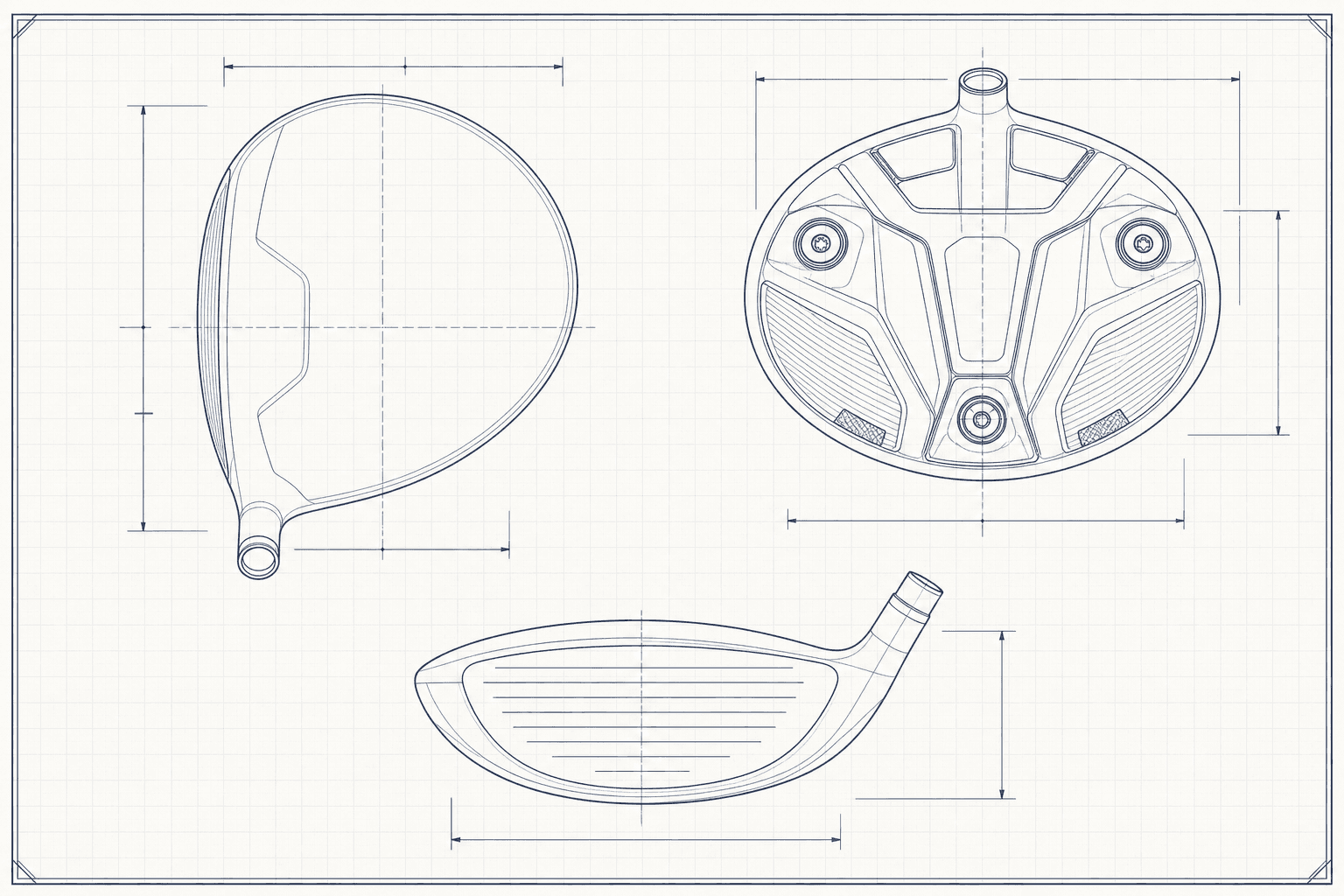
The unit of measurement is a Reference: one model, one year, one specification. Nothing is aggregated above it without saying so.
The blind spot
How fast does a driver depreciate. How quickly does it change hands. What does the successor model do to the price of the one it replaces. How much gear is circulating outside authorised channels. How does a brand's value retention compare with a rival in the same price band.
Nobody sells the answer as a measured, dated, reproducible series. The people on the other side of the trade have the same blind spot in mirror image: used-golf retailers and trade-in operators set buy-back prices on gut feel and a rival's shop window.
Three substitutes fill the gap today. Each of them stops somewhere short.
Table 1 — What exists today, and where it stops
| Substitute | What it measures | Where it stops |
|---|---|---|
| Retail panels | New-market sell-through, pricing and inventory at retail | At the checkout. No resale coverage of any kind. |
| Trade-in value guides | One number per club, aimed at shops and consumers | No method, no history, no sample size, no interval, no comparison. |
| An analyst's spreadsheet | Listing prices pulled by hand over a fortnight | An average of a handful of observations, undated and unrepeatable. |
What a listing becomes
A listing that appears gives a price, a model, a condition and a date. The same listing gone tomorrow is a sale, dated: we call it a presumed sale, and we never call it anything stronger.
Repeat that across a catalogue, every day, for months, and the after-market stops being anecdote. These are the indicators ClubTrace computes per Reference, each one reported with its sample size and, where an interval exists, its 95% CI.
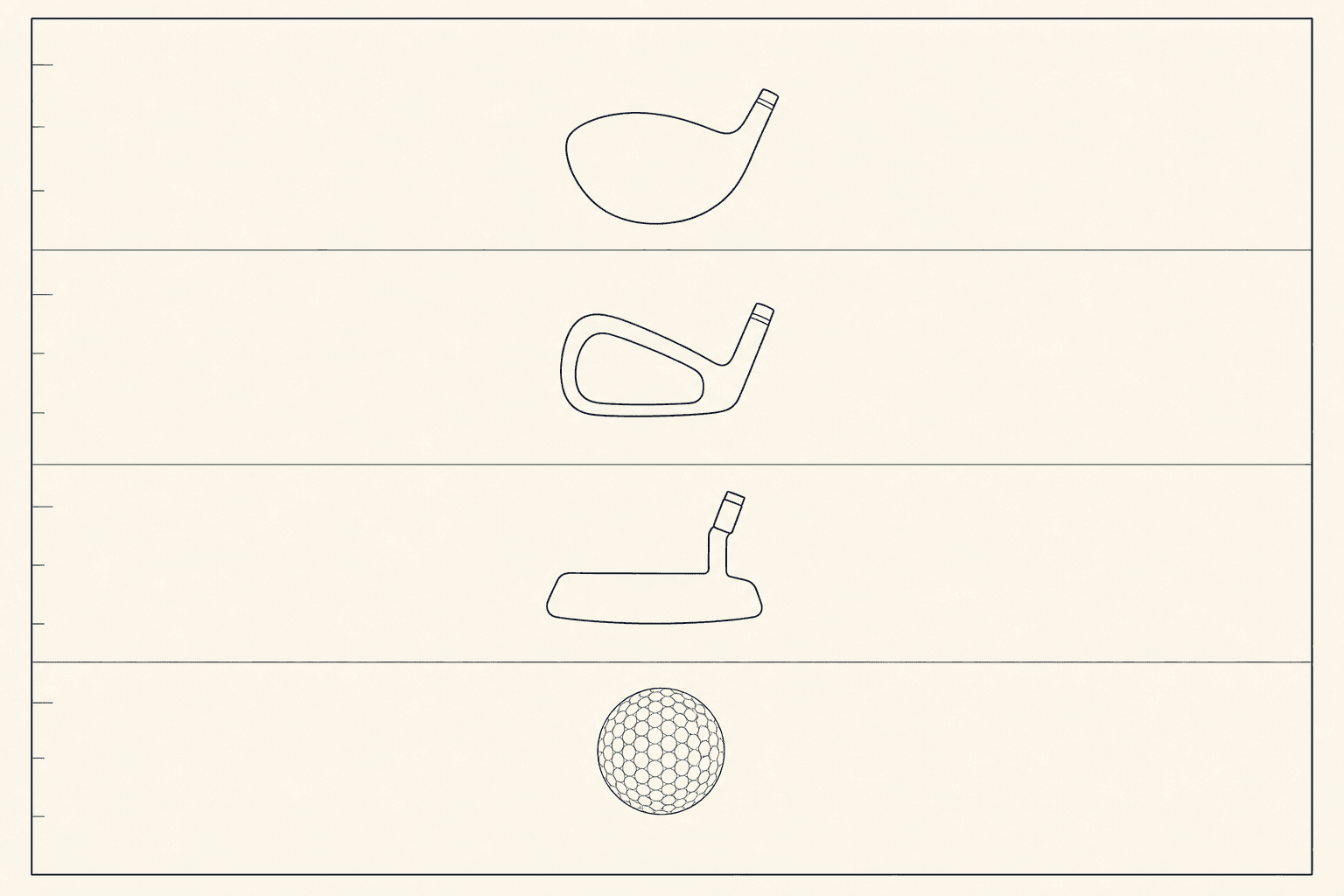
Coverage is built specimen by specimen: drivers, irons, putters, balls. A Reference enters the public Index at n = 30, and not before.
Table 2 — The named indicators
| Indicator | Definition |
|---|---|
| Median resale price | The median observed price today, against launch price. |
| Depreciation curve | A curve fitted across M+1 to M+36, reported with its R². |
| Monthly discount rate | The rate implied by the fitted curve, month over month. |
| Days to sell | Median days between first observation and presumed sale. |
| Liquidity Index | How readily a Reference clears, relative to its segment. |
| Cannibalisation test | The 90-day price effect of a successor model's announcement.This is a correlation, not a causal estimate. |
| Value Retention Ranking | Brands ranked base 100 on 12-month retention, within a price segment. |
| Anomaly flag | An observation or cluster the method cannot explain, raised rather than smoothed. |
Method, and the permission it rests on
A data supplier a brand's legal team can clear in one call is worth more than a bigger, dirtier one. So collection is legitimate by design, and the design is public.
- 01Permitted sources only
- We read a source only where its robots.txt and its terms allow collection. Every source we read is listed publicly, with its permission basis.
- 02At the delay they specify
- We crawl at the crawl delay the source publishes, never faster, and never behind a login or an anti-bot measure.
- 03Expansion by consent
- Beyond launch coverage we expand by official channel: partner and affiliate feeds, and marketplace APIs used with a developer key held in the founder's own name.
- 04The method is the product
- Deduplication, outlier exclusion by IQR and z-score, reference normalisation, curve fitting and R², and the stated limitations. Published, not narrated by a salesperson.
Table 3 — Launch coverage
GolfBidder, public UK catalogue
robots.txt permits, sitemap published
First source at launch
2nd Swing, Golf Avenue and other resellers
Written partner or affiliate feed
Requested, by consent
Marketplace official APIs, US, UK, DE, FR, AU
Developer key, founder's own name
On key provision
A source whose terms forbid collection is never read, whatever it would add. The Source register lists every source, its permission basis, its crawl delay and its date of first observation.
Four things, plainly priced
One-time purchases, hosted checkout, no subscription and no card kept on file. Brands come back at each product launch, resellers at each buying cycle, because a report is dated and last quarter's is stale.
Depreciation Index
Free
One public page per covered Reference. The live curve, the sample size, the date. The proof, not a teaser.
Pilot Report
Free, one per company
You name one Reference from your own catalogue. The full report is generated and emailed. Nothing withheld.
Reference Report
€490
The complete statistical dossier on one Reference: every indicator, PDF, and the CSV of observations behind it.
Category Report
€4,900
One category for one brand and its named competitors. Released once Reference Reports have paying customers.
Prices are stated here so nobody has to ask. Checkout is not open yet: the reports arrive when the coverage behind them does.
Read a report before it exists
The €490 Reference Report is laid out in full on a specimen page: every indicator, its sample size, its confidence interval, the source register and the CSV of observations behind it. The figures on it are illustrative and it says so at the top.
What we do not claim
ClubTrace has no proprietary dataset today. The database opens with launch coverage, and until a Reference reaches 30 observations there is no page for it and no estimate from us.
That is the whole position. A figure without its sample size is a bug, an estimate we cannot defend is not published, and a correlation is never dressed up as a cause. The numbers below are the honest state of the company on 24 August 2026.
Tell us the Reference you want measured first and it goes to the front of coverage. This opens your mail client. There is no form on this page and no list to join.
0
observations recorded
1
permitted source at launch
30
observations before a Reference is published
€0
revenue to date